
Start a Harker Heights Resident Search
A useful Harker Heights residents directory search begins with a real identifier, not a broad guess. Use a full name with a middle initial, a street number, a known time period, a parcel number, or a court number. Bell County keeps the property, deed, election, and court channels that matter most for the city, while Harker Heights keeps municipal records. Each source answers a different question. A parcel card can connect a tax-roll owner to an address. A deed can connect parties to a recorded transfer. A directory or census can place a household in a particular year.
None of those sources creates a complete household list. A property record does not list every person at a home, and a voter result does not count all adults at an address. Treat a match as a lead, save the source and date, then compare it with a second official or archival record.
- Search the Bell Central Appraisal District property search by owner or address to identify the parcel, its situs, and its legal description.
- Use VoteTexas for a lawful one-person registration check when the name and identifying details fit.
- Search the Bell County Clerk official-records index for grantor, grantee, date, or document clues.
- For an older household, compare the regional Killeen directory run, the 1993 Harker Heights map, and the county archive trail.
- When a municipal record is not posted, send a narrow request through the Harker Heights City Secretary or the city information portal.
Note: Record the spelling, date, record number, and access route for every Harker Heights result before moving to the next source.
Harker Heights Resident Records Offices
Harker Heights sits in Bell County, and Belton is the county seat. That matters when a search needs a person rather than a web result. Bell CAD, the Bell County Clerk, and the Bell County voter registrar are county routes. The City Secretary, Municipal Court, Planning and Development, and police records unit are local routes. A request should name the record type, a date range, and an address or case number whenever possible. The more exact the request, the easier it is for a custodian to find the right file.
Bell Central Appraisal District
411 E Central
Belton, TX 76513
(254) 939-5841
The address-focused chain is best handled on the Harker Heights by street page. It keeps the CAD, GIS, and deed steps together without treating an owner record as proof that every household member lives there.
Bell CAD Names Harker Heights Parcels
Bell CAD is usually the strongest first stop for a present Harker Heights address. Its property card can show a tax-roll owner, owner ID, situs address, mailing address, property or geographic ID, legal description, values, exemptions, and deed-history clues. The current and prior-years portals offer different entry points. The prior-years advanced search exposes owner name, street number, street name, property ID, geographic ID, subdivision, condominium, neighborhood, and tax-year controls.
Use the simple street name in the street-name field, then refine by number or a stable identifier. Keep the situs and mailing address separate. The research sample has a Harker Heights situs and a Belton mailing city, which is a normal tax-notice distinction rather than proof that the parcel is outside the city.
| Bell CAD field | Why it matters |
|---|---|
| Owner Name | Tests a tax-roll ownership association. |
| Street Number and Street Name | Finds a parcel by its physical location. |
| Property ID or Geographic ID | Keeps the search stable when street or mailing labels differ. |
| Subdivision or Neighborhood | Helps narrow common street or owner results. |
| Legal Description | Connects the parcel to the recorded deed and plat trail. |
Note: A homestead notation supports an owner-occupancy claim, but it does not identify renters, children, guests, or every other resident.
Harker Heights Voter Lookup Limits
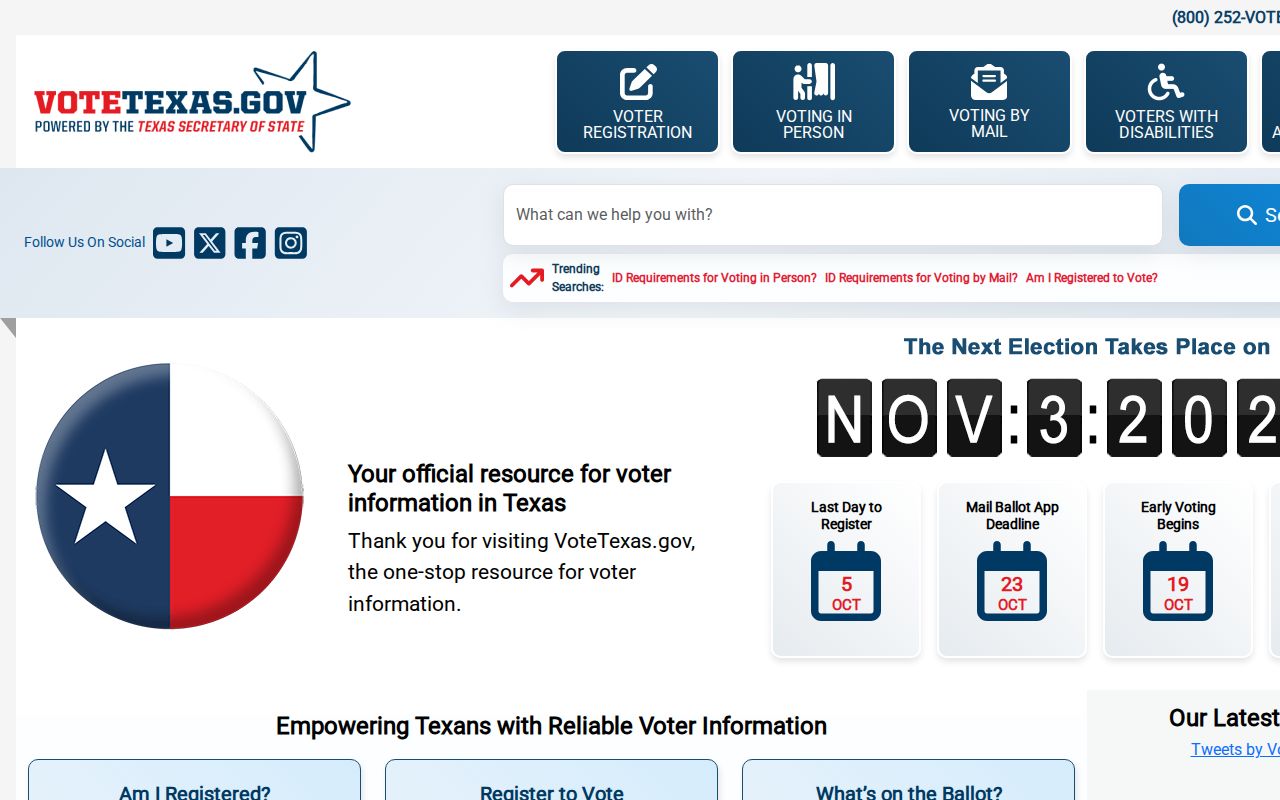
The statewide voter tool is a one-person registration check, not a Harker Heights residents directory export. Texas routes searchers through VoteTexas and the Secretary of State’s voter pages. The available lookup modes include VUID, Texas driver-license information, and first and last name. A result can help confirm registration status and election-jurisdiction information. It does not disclose how a person voted, and it cannot establish that every person in a household is registered.
The VoteTexas registration route is shown in the captured interface below. Use the live tool for its current labels and requirements. Do not copy sensitive inputs into notes or a public profile.
Texas Election Code controls what is public and what is withheld. Telephone numbers, driver-license and personal-ID numbers, Social Security numbers, and protected addresses are not ordinary lookup fields. A protected voter may be suppressed, shown with an alternate address, or absent from a public-facing result.
Current Harker Heights Resident Sources
Current directory-like records are partial by design. They may identify a property owner, a person registered to vote, a party to a recorded instrument, or a public civic contact. Each has a custodian and a limit. The table separates the source from the claim it can actually support.
| Source | What It Can Identify | Keeper | Access |
|---|---|---|---|
| Bell CAD property card | Tax-roll owner and parcel details | Bell CAD | Public web search, counter, phone, or form |
| Texas voter lookup | Registration-status lead | SOS and Bell registrar | One-person lookup or statutory request |
| Recorded instrument index | Grantors, grantees, and document parties | Bell County Clerk | Public index; images/copies may use cart or payment |
| City office contact list | Public municipal office routing | Harker Heights | Online city contact source |
| Civic organization listings | Public group contacts and meeting information | Harker Heights | City civic-organization page, not membership rolls |
For one named person, compare an ownership lead with a court, voter, vital-index, or business-record lead only when the dates and identifiers agree. The Harker Heights resident lookup page keeps that verification order focused on one person rather than one street.
Read the Bell Clerk Index
The Bell County Clerk’s current official-records portal is the recorded-document step in a Harker Heights resident trail. It supports Quick Search and Advanced Search, date-range narrowing, and separate choices for index-only searching or index and full-text OCR. Search a current owner or grantee, narrow the date, then capture the recording date, instrument or book and page reference, parties, and legal description. The seller on one deed may become the earlier grantee in the next search.
The portal displayed certification through August 31, 2026 during research, but its exact online start year was not shown. A web match is therefore not proof that the whole history is online. The clerk counter, public terminal, and copy route remain important when an index trail stops.
- Parcel
- A tax or map unit tied to a physical tract, not a list of people who live there.
- Grantor
- The party conveying an interest in a recorded instrument.
- Grantee
- The party receiving that recorded interest.
- Legal description
- The lot, block, subdivision, survey, or metes-and-bounds wording that ties land records together.
- Index
- A finding tool that points to a document; it is not always the document image itself.
Note: Copy prices and online-image access were not displayed in the inspected portal, so ask the clerk before ordering a certified or image copy.
Harker Heights CivicWeb Record Requests
City records use a different route from county deeds. The Harker Heights City Information Portal offers meetings, agendas, minutes, a document-library search, online public-record requests, and board applications. Its library search supports key words, exact phrase, all words, any words, proximity, exclusion terms, sorting, location selection, and browse controls. No universal start year is displayed because retention differs by record series.
For a city record that is not in the portal, the City Secretary accepts requests in person, through the portal, by mail, fax, or email. The city asks for enough dates and details to find the material and says requests may take up to 10 business days. Police records use their own route at the Police Department. That split keeps a request for a permit, meeting record, or municipal file with the office that has it.
Harker Heights Court Searches Need Context
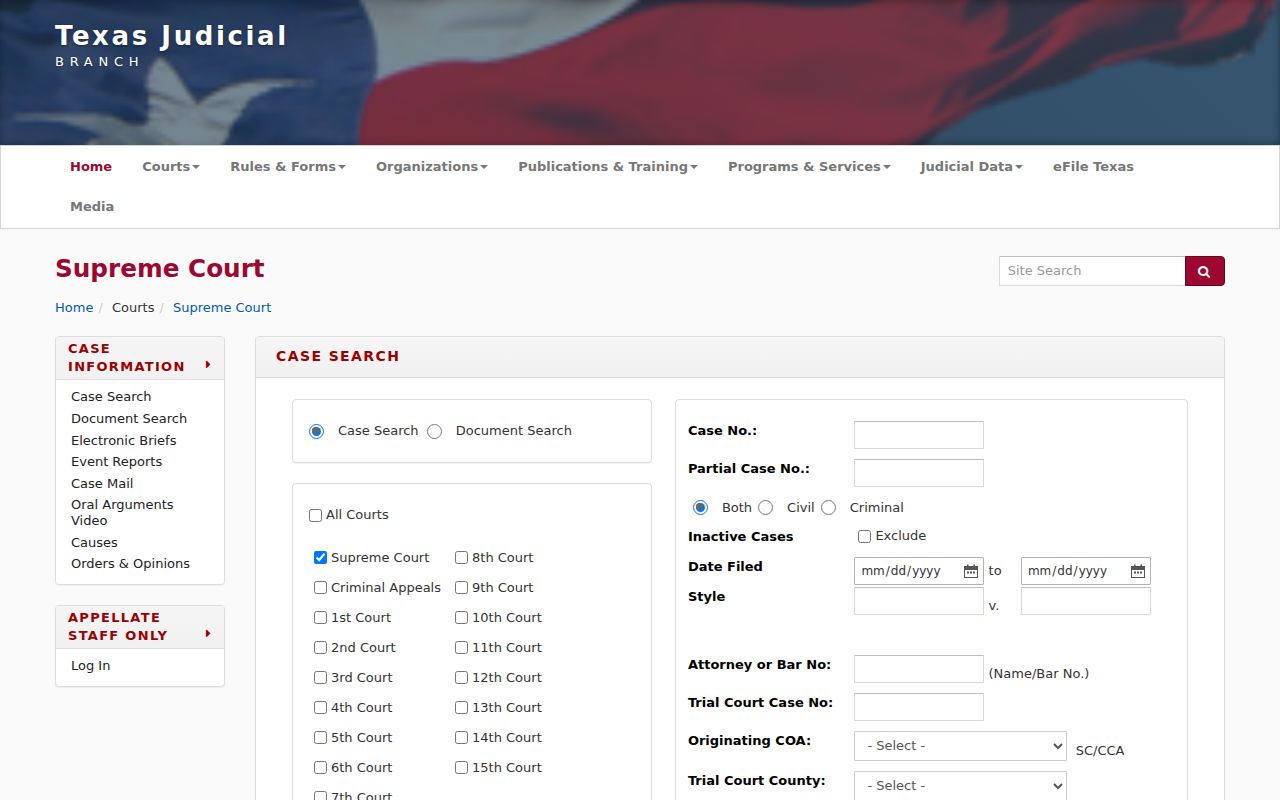
A court name hit is a lead, never instant identity proof. Harker Heights Municipal Court has its own search for citation number, driver-license information, SSN, vehicle information, name, and business name. It handles municipal matters and is not a Bell County civil or criminal docket. Bell district and county records have clerk and local-court channels, while statewide appellate material uses a separate Texas appellate search.
The Texas appellate Case Search interface is pictured below. Its Court, case-number, style, attorney, date, originating-court, and Bell County filters can help locate an appellate lead. The service is refreshed nightly and does not replace a trial-court file.
Compare party role, court, case number, filing date, and disposition before connecting any public record to a Harker Heights person. Juvenile, sealed, expunged, adoption, and protected material can be unavailable even when a name is otherwise common.
Historical Harker Heights Resident Collections
Harker Heights incorporated in 1960, so its historical directory trail is regional. The named runs are Killeen, Fort Hood, and Bell County resources, not a confirmed nineteenth-century Harker Heights volume. UT Austin’s Briscoe Center cites R. L. Polk Killeen directories for 1965, 1970, 1972, 1974, 1976 through 1978, 1980, 1981, and 2003. A 1963 Polk Killeen catalog lead and a 1968 Killeen-Temple criss-cross lead add earlier address-oriented options.
The 1993 Harker Heights map at the Texas State Library and Archives Commission has a street index, advertisements, a local business directory, and a Fort Hood map on its reverse. It can connect an older address to the right regional directory edition. The full collection and reading method belong on the Harker Heights city directories page.
Harker Heights Boundaries Change Records
Map and boundary context can prevent a false negative. Harker Heights began with roughly 950 acres and later grew to 9,064.6 acres through annexations. The 1988 Comanche Hills Utility District annexation alone added about 2,200 acres and 3,500 people. An old deed or directory can therefore use a nearby Killeen, Fort Hood, Bell County, or later-annexed description for ground that is now inside Harker Heights.
The Harker Heights GIS map shows address points, Bell CAD parcels, streets, zoning, land use, city limits, and the ETJ after its disclaimer is accepted. Those boundaries are approximate and are not a survey. Use a plat, legal description, or the county clerk for legal boundary questions.
Harker Heights Vital Index Boundaries
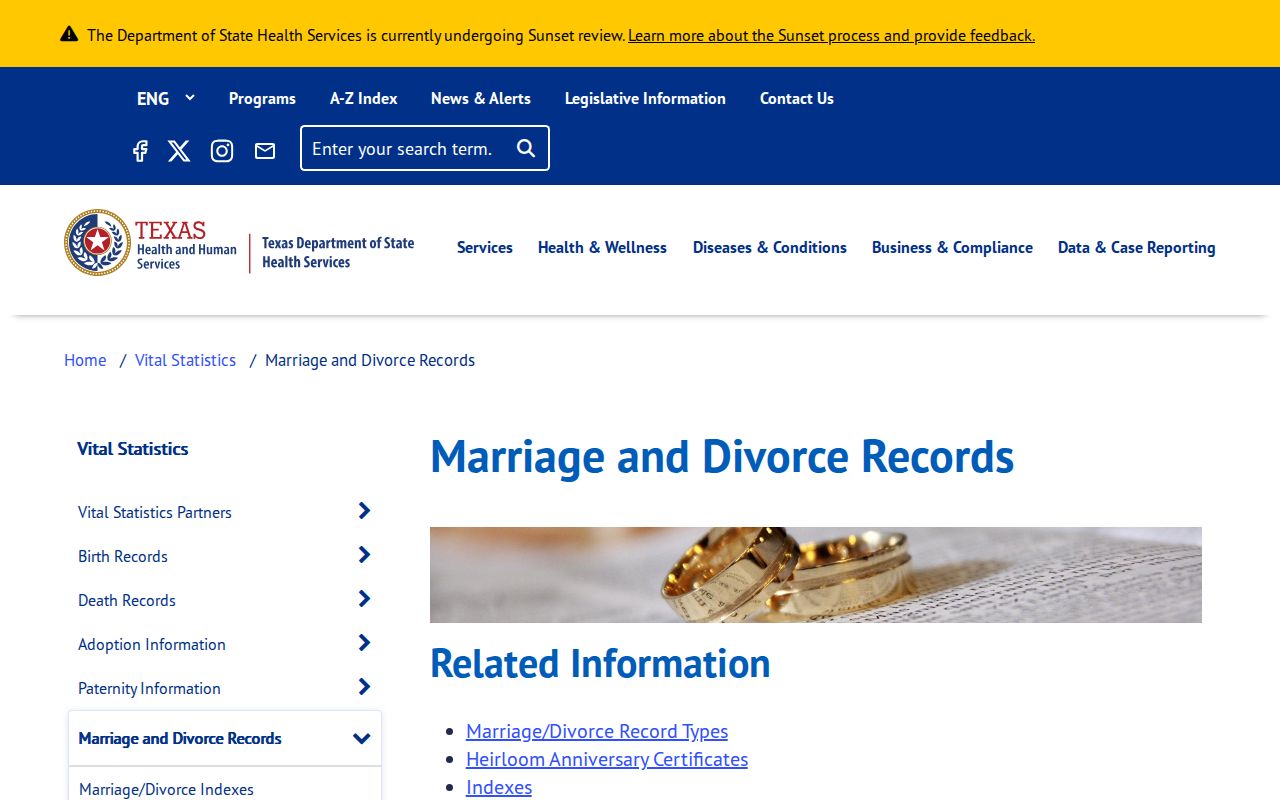
Vital records can confirm an event, but the source and access level change by record. Texas DSHS maintains birth and death indexes and marriage and divorce verification indexes, while Bell County offices hold the local marriage-license and divorce-decree routes. The state marriage index begins in 1966 and the divorce index in 1968. Birth records become public after 75 years and death records after 25 years under Texas Government Code section 552.115, subject to the statute’s details.
The Texas DSHS marriage and divorce page distinguishes a verification from a certified record. The captured page below is a reminder to use the correct route: Bell County Clerk for a certified marriage license, Bell County District Clerk for a divorce decree, and DSHS for its verification process.
Current vital copies have qualified-person and tangible-interest rules. An index result is limited evidence, not permission to publish a certificate image or assume access to protected birth, adoption, juvenile, or sealed information.
Harker Heights Records Beyond the Web
An online result is not the end of a Harker Heights residents directory search. The record may be recent but posted through a different custodian, older than a portal’s published coverage, available only at a public terminal, or restricted. Start again with the exact office that maintains the record. For a city file, give the Harker Heights City Secretary a narrow description with the address, record type, date range, and preferred format. The city accepts requests through its information portal, in person, by mail, fax, or email. Its police-records route is separate, and Planning or Mapping Services may be the appropriate contact for a permit, plat, zoning, or address question.
County and archival fallbacks have distinct functions. Bell CAD offers counter, phone, and form routes for property questions. The Bell County Clerk can explain counter, public-terminal, image, and certified-copy access for recorded instruments. For older series, the TSLAC Bell County records guide identifies deed records from 1850 through 1902, marriage records from 1850 through 1935, death records from 1903 through 1937, and older probate and court material. It points to archival and Baylor microfilm channels instead of claiming that a modern portal holds every volume.
Historical household work can also move to the Bell County Museum Research Library, local genealogy help, the Stewart C. Meyer Public Library catalog, or an archive reading room. Ask for one surname, one address, and one time period. Include a nearby year and the kind of record sought, such as a map, directory, deed, marriage, probate, or cemetery record. Identify both Harker Heights and Bell County, then try Killeen or Fort Hood geography for a pre-city or regional collection. That request gives staff a usable starting point and preserves the distinction between an index lead, a document image, and a certified or archival copy.
Note: A custodian can confirm the current procedure, access limit, and copy option when a Harker Heights record is not available online, keeping an archival lead from being mistaken for current proof.
Respect Harker Heights Privacy Controls
Texas public records have real limits. The Texas Address Confidentiality Program can give eligible survivors a substitute mailing address, and voter protections can suppress or alter a residence field. Driver and motor-vehicle data are restricted. Private utility, delivery, renter, child, guest, and sealed-court information is not a lawful residents-directory substitute. A missing result can reflect a different record system, a name variant, a time gap, or a privacy control.
When the web trail ends, use the custodian instead of filling the gap with guesswork. The City Secretary, Bell County Clerk, Bell CAD, DSHS, Bell County Museum Research Library, Bell County Genealogical Society, and TSLAC each offer an offline or staff-assisted route for different record types.