
Harker Heights City Directory Shelves
Harker Heights incorporated in 1960. For that reason, the practical historical-directory collection is a Killeen, Fort Hood, and Bell County trail rather than a verified, continuous Harker Heights-only run. Harker Heights researchers should check the area statement inside every volume. A Killeen edition can be useful for a Harker Heights household, yet it may also omit nearby addresses, use route designations, or limit its scope to a different community. The table separates confirmed collection leads from claims that have not been verified.
| Collection | Years | Where Held | Access |
|---|---|---|---|
| Polk Killeen city directory | 1963 | Texas State Association of Genealogical and Historical Societies catalog | Catalog lead; entry image was not available in the source review |
| Killeen city directories | 1965, 1970, 1972, 1974, 1976-1978, 1980, 1981, 2003 | UT Austin Briscoe Center | Collection citation and item-specific digitization or reading-room access |
| Killeen-area telephone directories | Item years vary | UT Austin Briscoe Center | Telephone and address leads; access depends on the item |
| Killeen-Temple criss-cross directory | 1968 lead | Library of Congress address-directory guide | Address-to-occupant research lead |
| Harker Heights map and business directory | 1993 | Texas State Library and Archives Commission | Map record with street index and reverse-side directory material |
No authoritative source reviewed established the first or last Harker Heights-specific printed directory year. There was also no accessible Harker Heights entry page to inspect. Those gaps matter. Record the edition date, publisher, area covered, page number, and alphabetic or address section before treating an entry as evidence.
Harker Heights City Directory Years
The closest confirmed year spine begins with a 1963 Polk's Killeen catalog record and continues through the Briscoe Center's selected Killeen volumes from 1965 to 2003. The gaps are part of the finding, not empty space to fill with guesses. A household can disappear because an edition was not issued, is not held there, excluded its neighborhood, or used a different spelling. Compare an address and surname in the nearest available editions instead of assuming that adjacent calendar years are available.
Browse the UT Briscoe Center Killeen directory collection before planning a visit or request. The listing is a reliable way to identify candidate volumes, but it does not make every page a searchable scan.
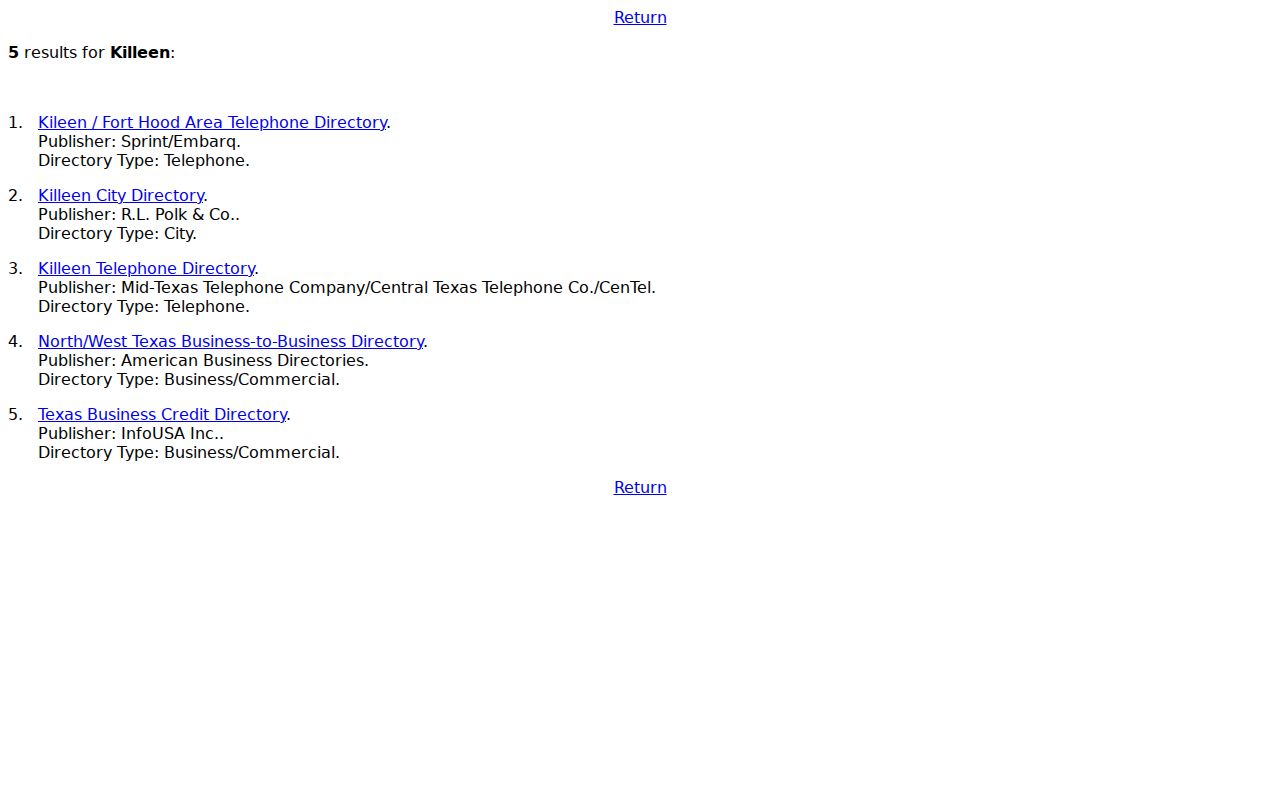
That collection is the regional starting point for a Harker Heights directory search, provided the edition's geographic scope is checked at the volume level.
- 1960: Harker Heights incorporated, making earlier municipal-label searches inappropriate.
- 1963: a Polk's Killeen city directory appears in the genealogy-society catalog.
- 1965-1981: selected Killeen editions in the Briscoe Center run provide repeated comparison points.
- 1993: the Harker Heights street map adds an address index and local business material.
- 2003: a later Killeen directory citation is confirmed, without proving a continuous run after it.
Harker Heights Directory Scope
Killeen and Fort Hood matter because they frame migration into and around Harker Heights. For Harker Heights family history, military households and temporary assignments can appear under a regional heading, with rank or unit context in related materials. A directory absence is not proof that a family was absent from the area. It may reflect the volume's coverage, a telephone listing choice, a route address, or a short stay. Keep the printed city and ZIP exactly as shown until a map, parcel record, or other source resolves the place.
The regional approach also avoids projecting today's boundary backward. Harker Heights grew through annexations from an original area of about 950 acres to 9,064.6 acres in the 2007 planning table. An address described under Killeen, Bell County, or a nearby area in an older record may fit a later Harker Heights location without being a contradiction.
Note: A directory's coverage note is evidence, so photograph it with the entry and abbreviation key.
Decoding a Harker Heights City Directory
There is no verified local page image from which to quote an actual Harker Heights entry. That limits what can be said responsibly. When an edition is open, inspect the entry and its own front-matter key. Directory types commonly organize an entry around a surname and given name, then may include spouse notation, occupation, employer, street address, telephone number, or owner and renter marks. The point is to inventory what the particular volume displays, not to supply a model entry from memory.
| Name form | Copy surname-first order, initials, suffixes, and spelling exactly as printed. |
|---|---|
| Relationship notation | Record spouse or widow wording only if that edition shows it. |
| Address and phone | Capture street, unit or route, telephone number, and the section where found. |
| Work or business line | Transcribe occupation, employer, or classification only when present in the entry. |
| Marks and cross-references | Use the volume's abbreviation key for any owner, renter, widow, or cross-reference mark. |
A name can be surname-first, have a middle initial, or use a relationship abbreviation. Preserve that source form before making a separate search variant. The same rule applies to a street number: an apparent change may be a move, a new building, a directory error, or a changed addressing convention.
- Criss-cross directory
- An address-order directory section. It can turn a known street number into an occupant lead for that edition.
- Householder index
- An alphabetic list that usually centers on the person named for a household, not a complete roster of everyone there.
- Abbreviation key
- The volume's own explanation of shortened words and marks. Capture it before interpreting any notation.
Harker Heights Criss-Cross Directory Leads
The Library of Congress address-directory guide identifies a 1968 Killeen-Temple criss-cross lead. Unlike an alphabetic directory, a criss-cross section works from the address toward a listed occupant. It is useful when a parcel, map, or old letter supplies a street number but no dependable name. It remains a lead, not proof of everyone who lived there, because annual directories can omit children, roommates, short-term occupants, and unlisted households.
For a current address-based record chain, use the Harker Heights street address directory after the historical volume has supplied an older spelling or street clue. That separates the historical shelf from the modern parcel and recorded-instrument trail.
1993 Harker Heights Map Directory
The 1993 Harker Heights street map at the Texas State Library and Archives Commission is more than a road map. Record 07768 has a street index, local advertisements, a business directory on the reverse, and a Fort Hood map. For Harker Heights research, it can connect an address from a later county record to an era-specific street reference or civic landmark. It cannot identify a household on its own, so use it beside the appropriate directory or county record.
The TSLAC 1993 Harker Heights map record is the source for this historical map-directory hybrid. Use the map's index to frame a library or archive request with a street name and approximate period rather than assuming a modern online map preserves every historical label.
Trace Harker Heights City Directory Households
A household trail is strongest when it moves one edition at a time. Start with a later name, telephone number, or street number, then check the nearest regional volume in both surname and address order. Confirm that it covers Harker Heights before copying anything. A directory may describe an occupant or telephone listing while a deed identifies recorded title, so the two sources should be kept in separate columns of the research notes.
- Write down the edition, page, city or area scope, section, and every spelling seen in the first result.
- Move backward or forward one confirmed edition, comparing the name, address, unit, telephone number, and any notation.
- Check a criss-cross section when it exists, but treat the result as one annual address snapshot.
- Pair the result with Bell County deed or appraisal records for legal-description and owner clues.
- Pair older family research with the public census through 1950, using Bell County, Killeen, or Fort Hood geography rather than forcing a later city label.
- Use obituary, cemetery, probate, marriage, death-index, or later business-filing evidence to investigate a move, surname change, death, or transfer.
A disappearance can mean a move, death, changed listing practice, or a scope gap. It does not establish one explanation by itself. The federal census is public through 1950 under the 72-year rule, but Harker Heights was not incorporated then, so the geographic search must stay regional.
Harker Heights Directory Desk
Stewart C. Meyer Public Library, at 400 Indian Trail, publishes catalog, e-book, newspaper, and e-resource links, but the official pages did not provide a detailed inventory of local Polk directories, reverse directories, obituary indexes, newspaper microfilm, or yearbooks. Call (254) 953-5491 before traveling with the surname, address, and date range ready. The city’s two library pages showed conflicting hours during research, so a published schedule should not be treated as permanent.
The Stewart C. Meyer Public Library page is the local entry point for the catalog and e-resources.

Start with the catalog and staff because the published page does not identify a complete Harker Heights city-directory shelf.
Its card rules may affect access to licensed databases: Bell and Coryell residents can qualify with photo identification and proof of residence, while the listed nonresident card cost is $25 per year. Ask reference staff which exact title, date range, microfilm, or licensed archive is available. That narrow request is more likely to reveal a useful local source than a broad request for “all records.”
Note: Confirm an item is local, regional, digitized, or reading-room-only before relying on a catalog entry.
Harker Heights Directory Archive Routes
When the municipal library cannot confirm an item, the fallback ladder is concrete. The Bell County Museum Research Library holds in-house Central Texas history, family and genealogy material, historic map reproductions, Bell County cemetery information, and Salado history at 201 N Main in Belton. Its listed contact is (254) 933-5243 and museum@bellcounty.texas.gov. It is a research stop, not a remote promise to search every name.
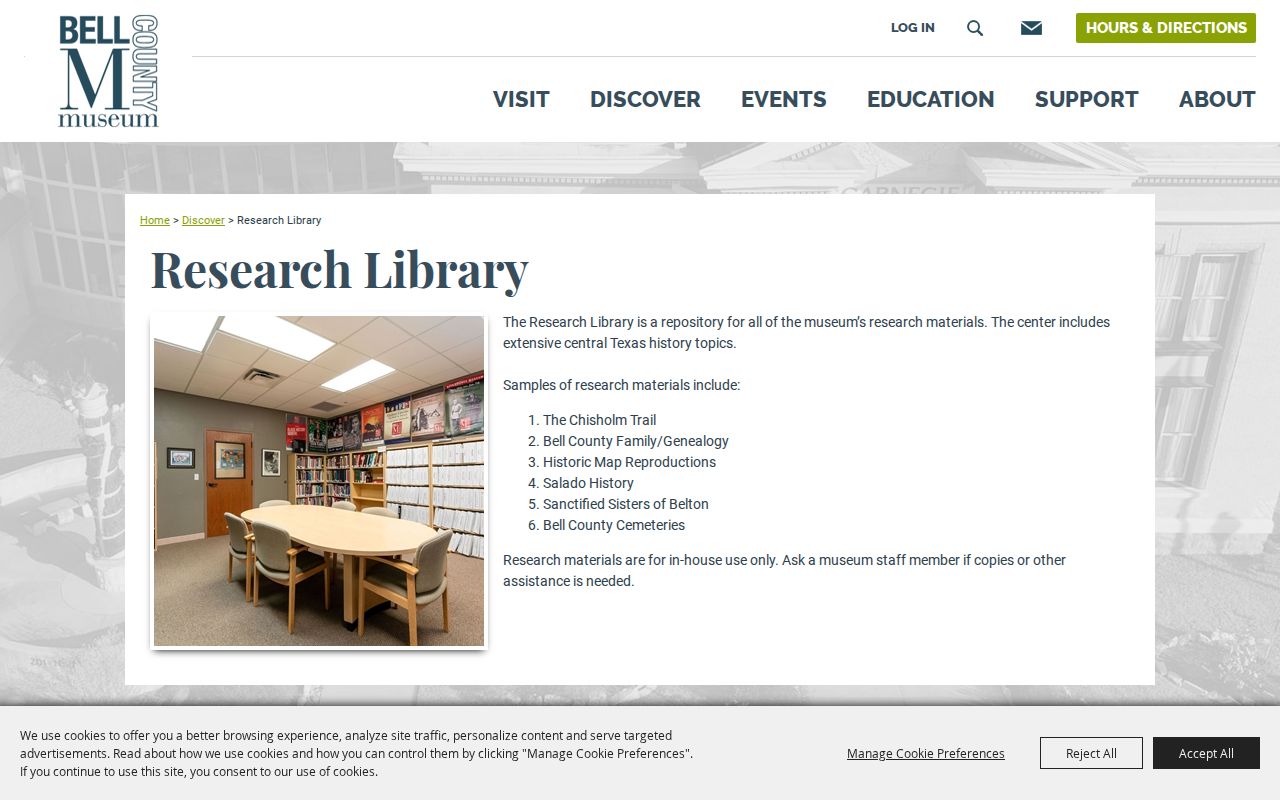
The museum can supply local-history context when a directory, map, cemetery lead, or family surname needs a Bell County source beside it.
The Bell County Genealogical Society offers research guidance through Temple Public Library on listed days and Killeen Main Library by appointment. TXBell maintains cemetery, obituary, census, and family-file pages. Use either for navigation and compare every indexed or user-submitted lead with an original county, state, or archival record.
Missing Harker Heights Directory Entries
A present-day GIS or appraisal record does not create a complete historical household list. A map can place a street, a deed can identify title, and a directory can show a listed name or phone connection. Each answers a different question. A renter, child, guest, or unlisted household member may not appear in any one of them. The responsible result is a dated source note, not an inference that a non-result proves absence.
There is no verified Harker Heights-specific house-history guide, cemetery database, or complete municipal directory inventory in the reviewed sources. Ask the library, museum, society, TSLAC, or county office for the exact period and record set. That preserves a useful research gap instead of disguising it as a completed search.